Understanding Pitch, Roll, and Yaw in Paragliding: Beginner’s Guide to Flight Control
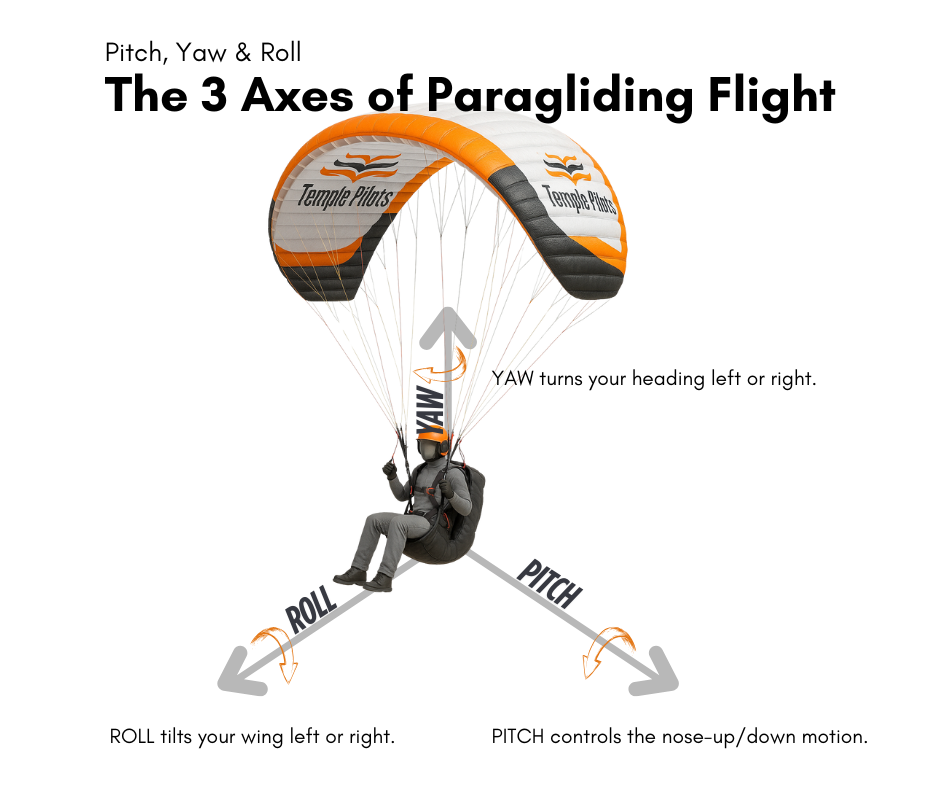
Flying a paraglider is an exhilarating experience, but to fly safely and with confidence, every pilot must understand how the wing moves through the air. Every aircraft, including paragliders rotates around three main axes : Pitch, Roll, and Yaw. These three movements determine how your wing behaves in the sky and how you control it. Read on to find our more about pitch, roll, and yaw in paragliding.
1. Pitch – Forward and Backward Tilt
What it is:
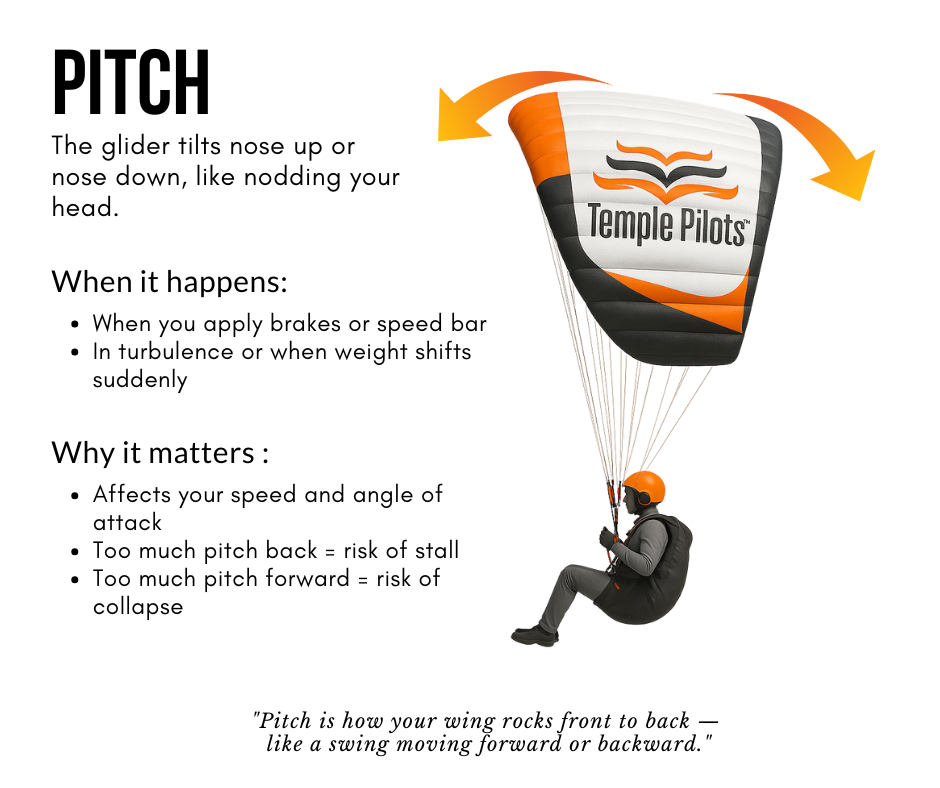
Pitch is the rotation of your glider along its lateral axis, which runs side-to-side through the wing. In simple terms, it’s when the nose of the wing tilts up or down, like nodding your head.
When it happens:
Applying brakes
Using the speed bar
In turbulence or wind gusts
Why it matters:
Pitch controls your speed and lift.
Pulling too much pitch backward can stall the wing.
Pitching too far forward can reduce lift and increase collapse risk.
In easy words:
“Pitch is how your wing rocks front to back, like a swing moving forward and backward.”
2. Roll – Side-to-Side Tilt
What it is:
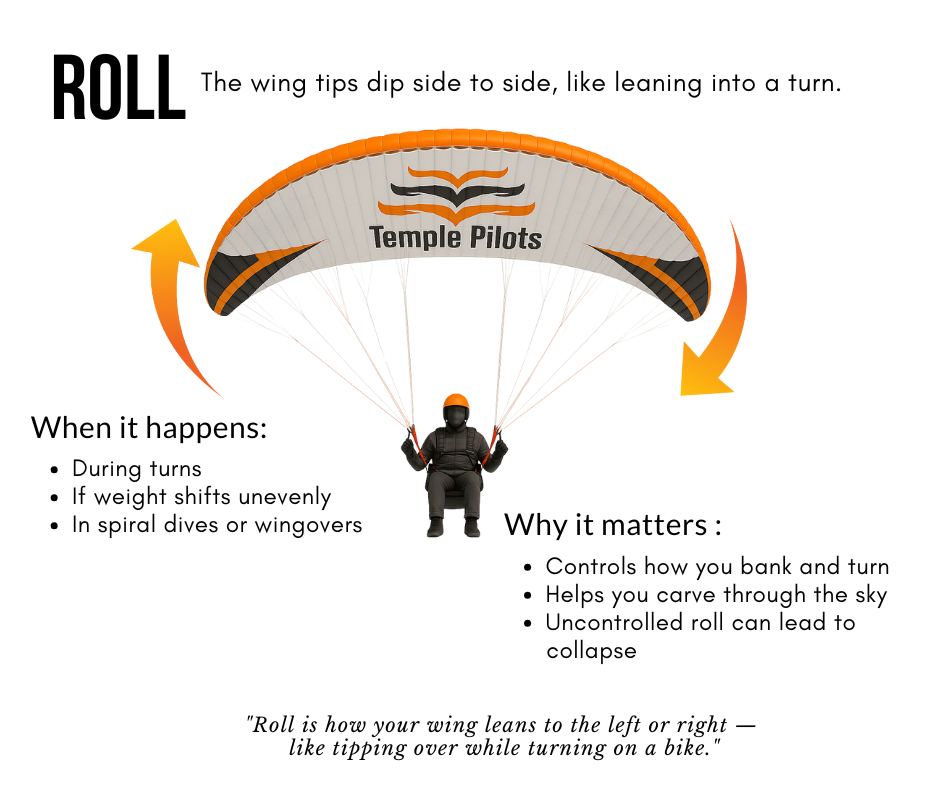
Roll is the rotation of your glider along its longitudinal axis, which runs from nose to tail. This is when one wingtip dips while the other rises, creating a banked turn.
When it happens:
During turns
Weight shifting
Spiral dives or maneuvers
Why it matters:
Roll determines how smoothly and efficiently you turn.
Uncontrolled roll can make the wing unstable or trigger a collapse.
In simple words:
“Roll is how your wing leans to the left or right, like tipping over while turning a bike.”
3. Yaw – Turning Without Tilting
What it is:
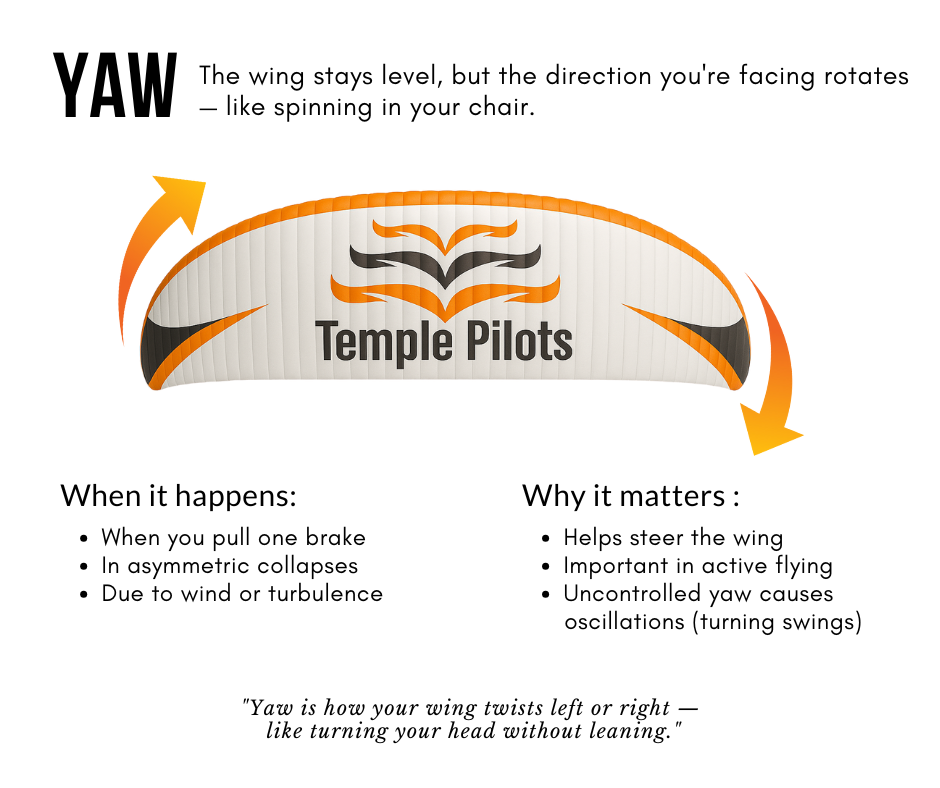
Yaw is rotation around the vertical axis, which goes through the pilot from top to bottom. Unlike roll, the wing stays level, but the direction changes — think of spinning in your chair without leaning.
When it happens:
Pulling one brake more than the other
Asymmetric collapses
Wind pushing the wing sideways
Why it matters:
Yaw helps you steer and adjust heading.
Uncontrolled yaw can create oscillations, which feel like the wing is swinging side to side.
In simple words:
“Yaw is how your wing twists left or right while staying level, like turning your head without leaning.”
Why Knowing These Axes Matters
Understanding pitch, roll, and yaw helps you:
React faster to turbulence
Make smoother turns
Control your speed and heading
Fly safer and more confidently
Even experienced pilots constantly monitor these movements, consciously or subconsciously, to maintain stability and enjoy the freedom of the sky.