There was a time when the idea of flying a near-200 km flat triangle on an EN-A paraglider would have sounded optimistic at best and absurd at worst.
Cross-country records belonged to high-performance machines. Two-liners were for serious distance. A-wings were for learning, local soaring, and relaxed flying.
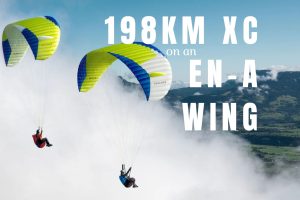
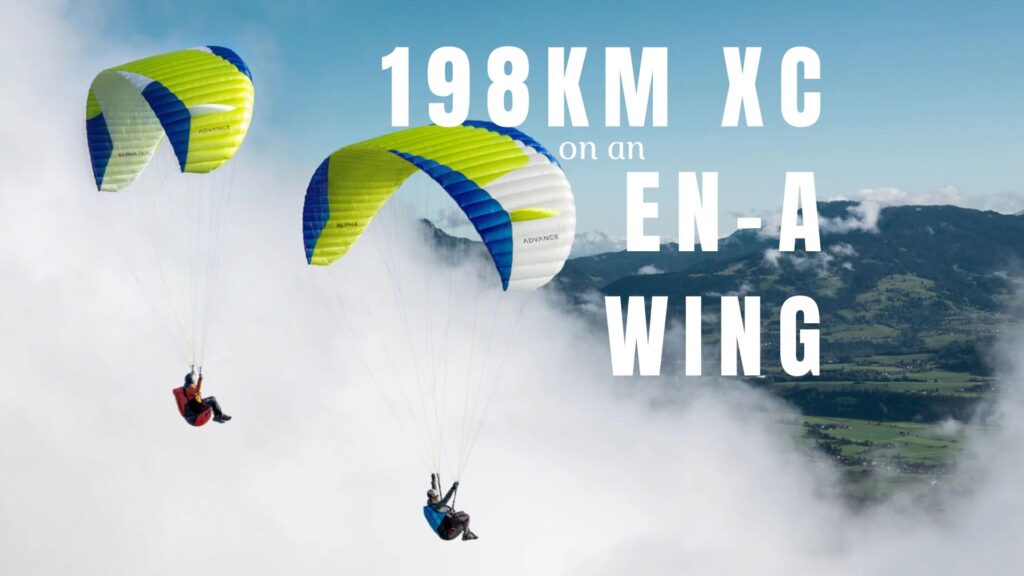
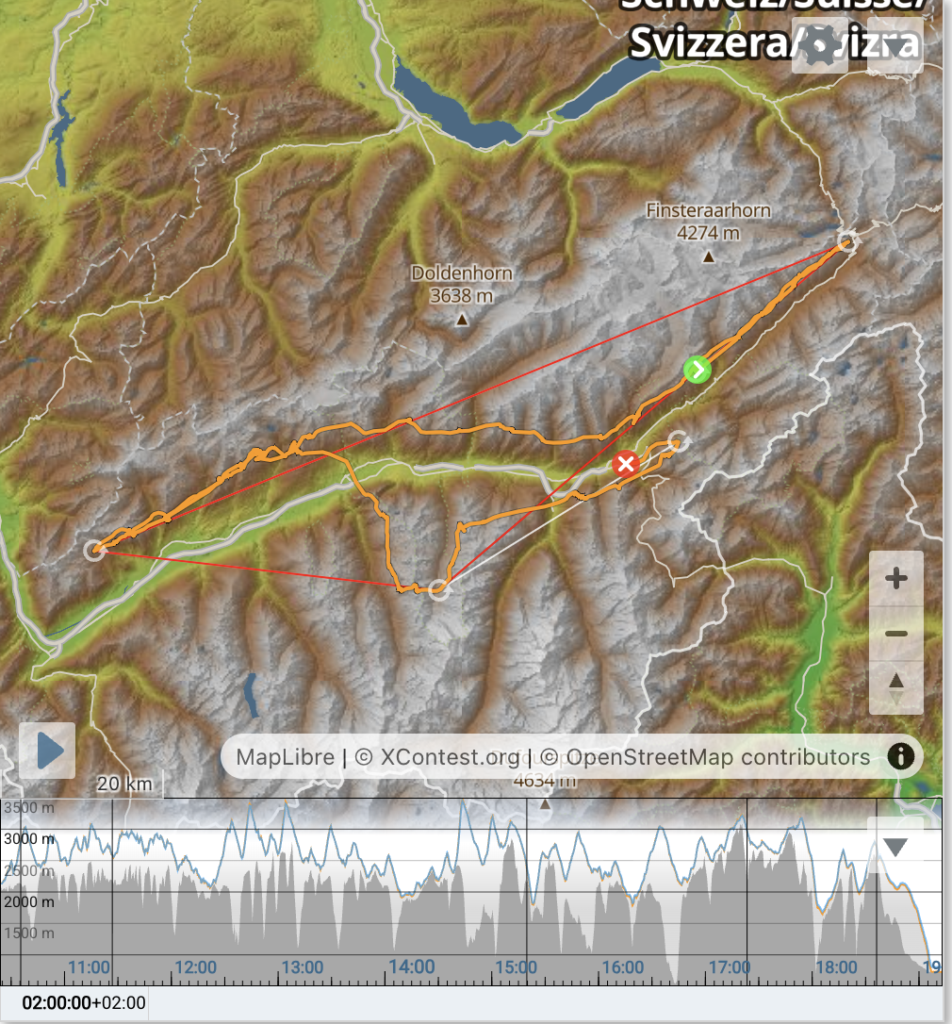
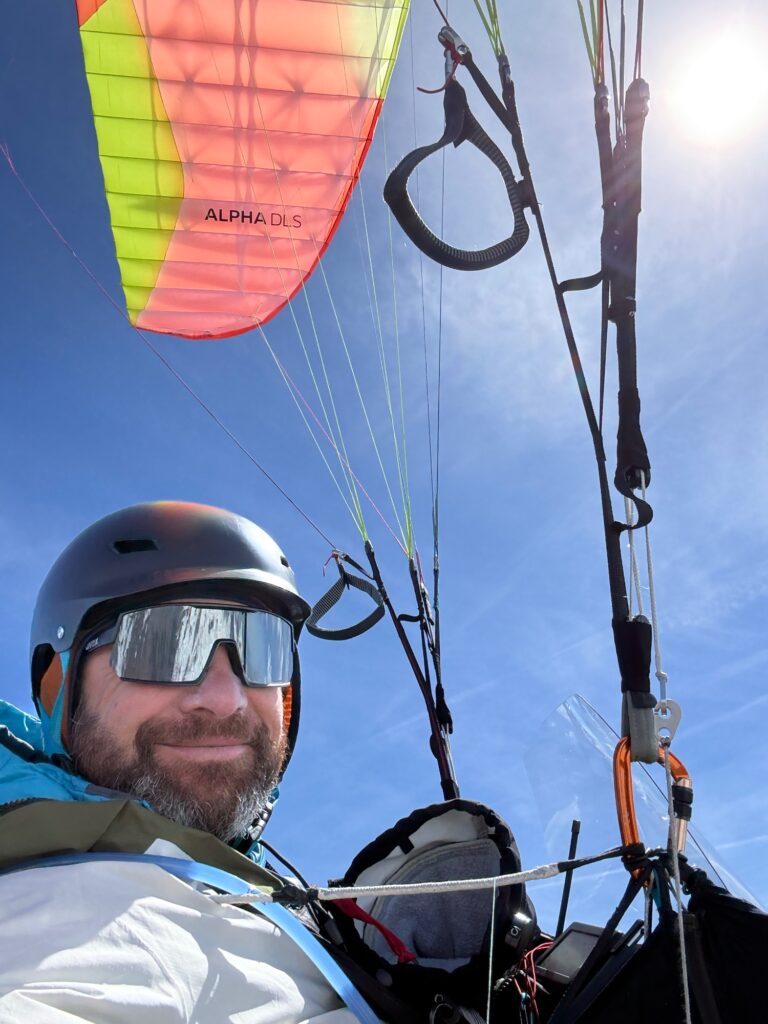
Yet on 27 April 2026, Swiss pilot Andy Jäggi set out from Fiesch and completed a remarkable 198.12 km flat triangle aboard an ADVANCE Alpha DLS.
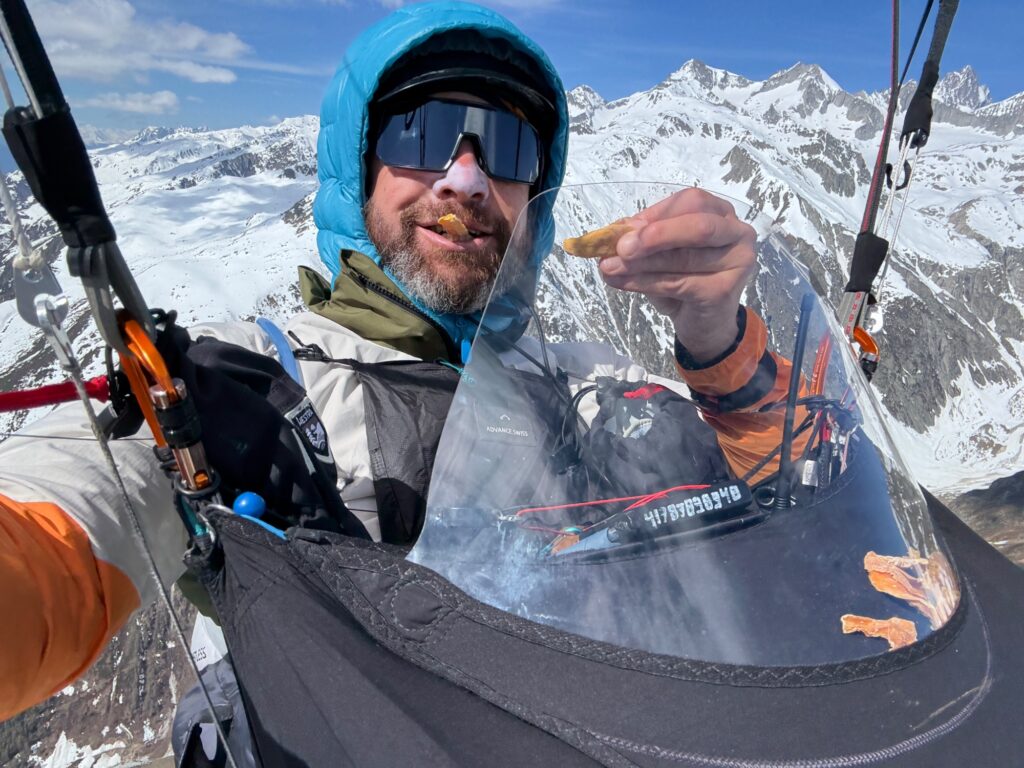
Nearly 200 kilometres. On an A-wing. And perhaps most interestingly, he did it while casually eating mangoes in flight.
A Flight That Challenges Assumptions
The numbers alone are impressive:
- Distance: 198.12 km flat triangle
- Airtime: 8 hours 49 minutes
- Maximum altitude: 3,487 m
- Maximum climb: 7.0 m/s
- Average speed: 24.77 km/h
- Track length: 324.8 km
But statistics tell only part of the story.
What makes this flight particularly fascinating is the question it raises about modern paraglider design.
In his comments, Jäggi wrote:
“Impressive how well modern A-wings glide.”
He also revealed the motivation behind the flight:
“I wanted to test my theory that an A-wing achieves around 70% of the performance of a two-liner.”
That statement deserves attention.
For years, pilots have discussed performance differences between categories. Most comparisons focus on glide ratios, top speed, or competition results. Yet real-world XC flying is far more complex.
The fastest glider is not always the one that gets flown most efficiently.
The Rise of a New Generation of A-Wings
The Alpha series from ADVANCE has long been associated with beginner-friendly handling and passive safety.
The latest Alpha DLS, however, represents something different.
Built using ADVANCE’s lightweight DLS construction philosophy, the wing benefits from modern materials, refined internal structures, and aerodynamic improvements that simply did not exist in A-class gliders a decade ago.
While certification remains EN-A, the performance envelope has expanded significantly.
Today’s A-wings launch easier, climb better, penetrate wind more effectively, and retain energy far better than their predecessors.
The result is a wing that still prioritizes safety while offering genuine XC capability.
Flights like Jäggi’s are evidence of that evolution.
The Swiss Alps: The Ultimate Test Ground
Launching from Fiesch places a pilot in one of Europe’s most respected cross-country arenas.
The region combines:
- Massive alpine terrain
- Reliable thermals
- Long valley systems
- Significant altitude potential
- Complex weather interactions
A flat triangle of nearly 200 km here demands far more than simply having a good wing.
It requires:
- Route planning
- Thermal efficiency
- Energy management
- Weather interpretation
- Mental endurance
- Consistent decision-making
Almost nine hours in the air leaves little room for mistakes.
Performance Is More Than Glide Ratio
Many pilots become obsessed with wing performance figures.
Glide ratio.
Speed.
Polar curves.
Yet experienced XC pilots understand that actual distance comes from a combination of factors:
Climb Efficiency
Finding and centering thermals consistently often contributes more to XC success than a few points of glide performance.
Mental Bandwidth
A relaxed pilot can focus more on strategy and less on wing management.
Comfort
Flying for nine hours requires physical and psychological ease.
Safety Margin
When conditions become uncertain, greater passive safety allows more conservative yet sustainable decision-making.
This is where modern A-wings begin to change the conversation.
If a pilot feels comfortable enough to spend the day efficiently connecting climbs and glides, the distance can become surprisingly competitive.
"Impressive how well modern A-wings glide. And all the while, comfortably munching on a mango."
Andy Jaggi
The Mango Test
Perhaps the most memorable detail from the flight is Jäggi’s remark about eating mangoes while cruising.
It sounds humorous, but it highlights something important.
The best long-distance flights often look deceptively uneventful. No constant wrestling with the wing. No endless stress. No fighting every thermal. Just flowing with the day.
When a pilot has enough spare mental capacity to enjoy a snack, observe the landscape, and still fly efficiently, that says something about both the pilot and the equipment.
Seventy Percent of a Two-Liner?
Jäggi’s theory was that an A-wing might achieve around 70% of the performance of a modern two-liner.
Whether the exact percentage is correct is almost beside the point.
The more interesting observation is that the gap appears smaller than many pilots assume.
Certainly, a modern two-liner remains faster. It retains superior glide. It dominates competition environments.
Yet many recreational pilots do not fly at the edge of those performance differences. For them, the practical distance achieved over an entire day may depend more on decision-making and consistency than on theoretical aerodynamic superiority.
A flight like this suggests that modern A-wings have become capable of reaching distances once considered firmly within the territory of advanced classes.
What This Means for Everyday Pilots
The significance of this flight extends beyond one impressive tracklog. It reflects a broader trend in paragliding.
The categories remain different, but the capabilities of lower-certified wings continue to grow.
Pilots no longer need to rush into higher-performance classes to experience meaningful XC adventures.
With the right conditions, strong skills, and disciplined flying, remarkable distances are possible on wings that prioritize simplicity and safety.
For many pilots, that may be the most encouraging lesson of all.
The Real Achievement
The headline will naturally focus on the number:
198.12 kilometres on an EN-A wing.
But perhaps the bigger story is what the flight says about modern paragliding.
Technology continues to improve. Designers continue to refine efficiency. And the boundaries of what pilots believe possible continue to shift.
Nearly 200 kilometres on an Alpha DLS is not proof that A-wings have become two-liners. It is proof that modern A-wings have become far more capable than many pilots realize. And somewhere over the Swiss Alps, while calmly eating mangoes and carving a huge flat triangle through the sky, Andy Jäggi provided a compelling demonstration of exactly that.